
The Camberwell Kabinett was an operational bus inspectors’ shelter from the 1950s until the early 2000s. A bus inspector would use this kiosk to maintain a log book of the various bus drivers finishing their routes. Around 2010, it became disused. There was also a second, sister shelter across the street, which was removed from the street in 2020. The Kabinett is located near an Abellio bus depot, which remains active.
Architectural remnants are one of the most valuable and ubiquitous pieces of visual evidence from the history of a city. From free-standing structures to street signs, the architectural hodgepodge of the metropolis tells a story of its vacillating states of destruction and development brought on by events like war, social revolution, and gentrification.
The brutaful essence of this particular kiosk can be observed in its geometric form and monochrome façade. Introduced to postwar London in the 1950s, Brutalist architecture was historically intended to enforce brotherhood and unity between various ethnic groups. Instead, it was interpreted as representing a forced ideology, but remains a distinct feature of London’s urban ecology.
Located in the London Southeast borough of Southwark, Camberwell Road has been subject to increased development over the past decade. A stone’s throw from Elephant and Castle, this particular piece of road has amped up commercial and residential real estate development since 2021, when the landmark’s run down shopping centre, first erected in 1965, was torn down.
Developer Keltbray has since been demolishing the 2.5 acre site entirely, and will replace it with a £1billion development, including nearly 1,000 new flats, a new tube station for the Northern Line, and a new university building.
Construction has spread down Camberwell Road like wildfire, including another development project just metres away from the Kiosk at neighbouring Camberwell Green.
The current increase in e-commerce is generating growing problems in urban areas in terms of both traffic flow (increasing traffic, no parking spaces) and environmental issues (noise, atmospheric pollution, etc.). In parallel, the evolving depravity of gentrified districts incites compelling questions about urban infrastructure.
Known as the land of the bus, South London has relatively little public transportation infrastructure compared to Central, West, and North London. North of the river
there are 250 tube stations, whereas south has only 30. This makes buses and bus culture synonymous with South London life.
As a former bus terminus shelter, the function of the Kabinett has evolved while its form has remained more or less unchanged.
Until now.
The kiosk has been relinquished of its industrial occupation, and is now an informal platform for digesting and deliberating the steadily changing energy of the neighbourhood.
Pictures below from 2008 show the Kabinett while it was still being used as a bus inspector’s kiosk. The structure has since been abandoned for over ten years.
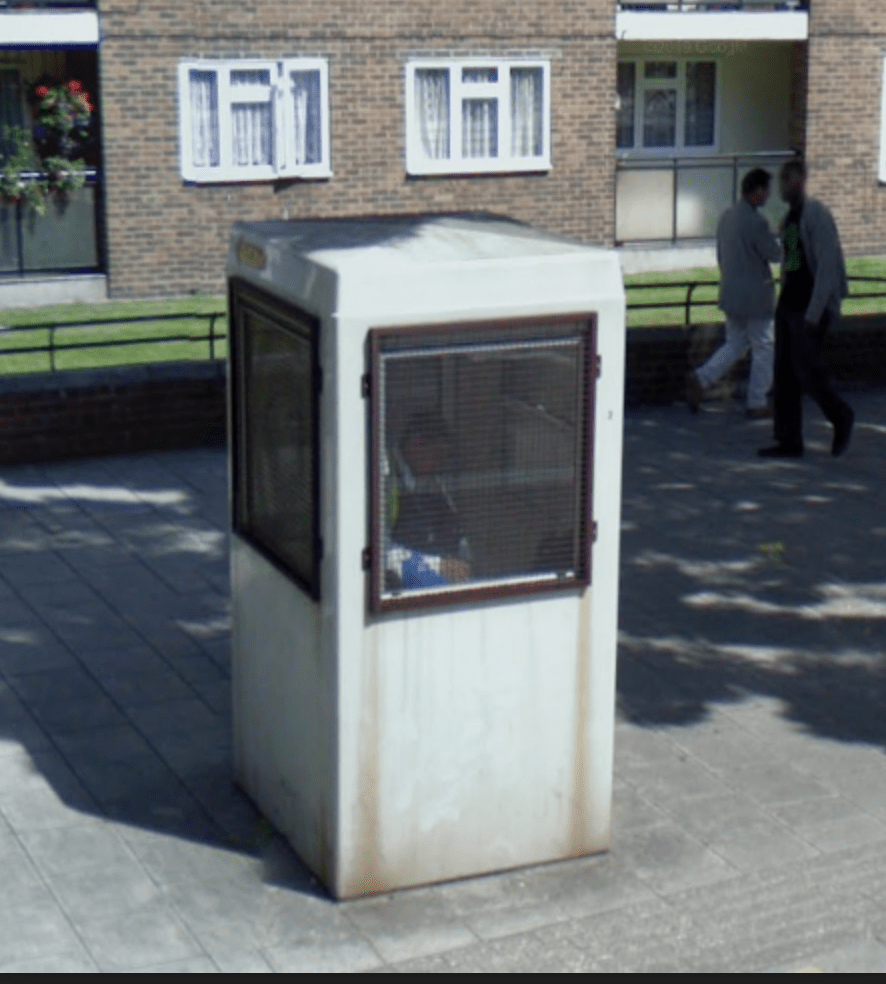
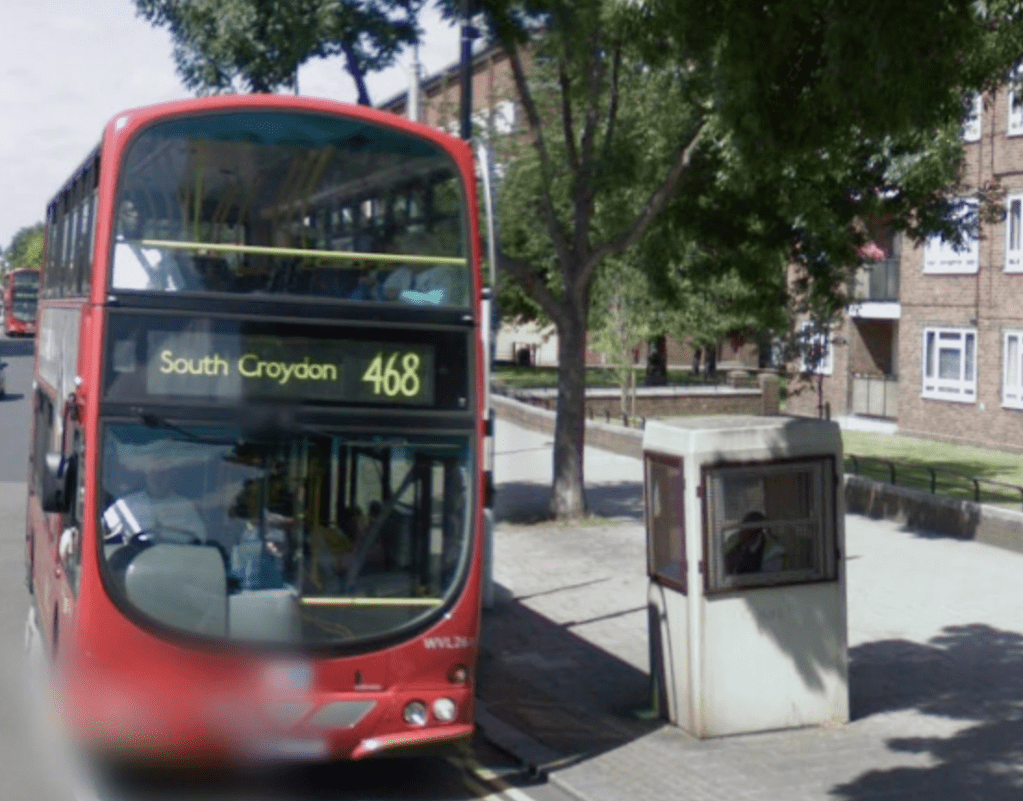
By rekindling the utility of the forgotten structure, we reimagine its role within South London’s mixed-use urban landscape and invite each exhibition as a contribution to ongoing conversations about culture, conservation, and the built environment.
“ street art…offers so much and asks for so little”
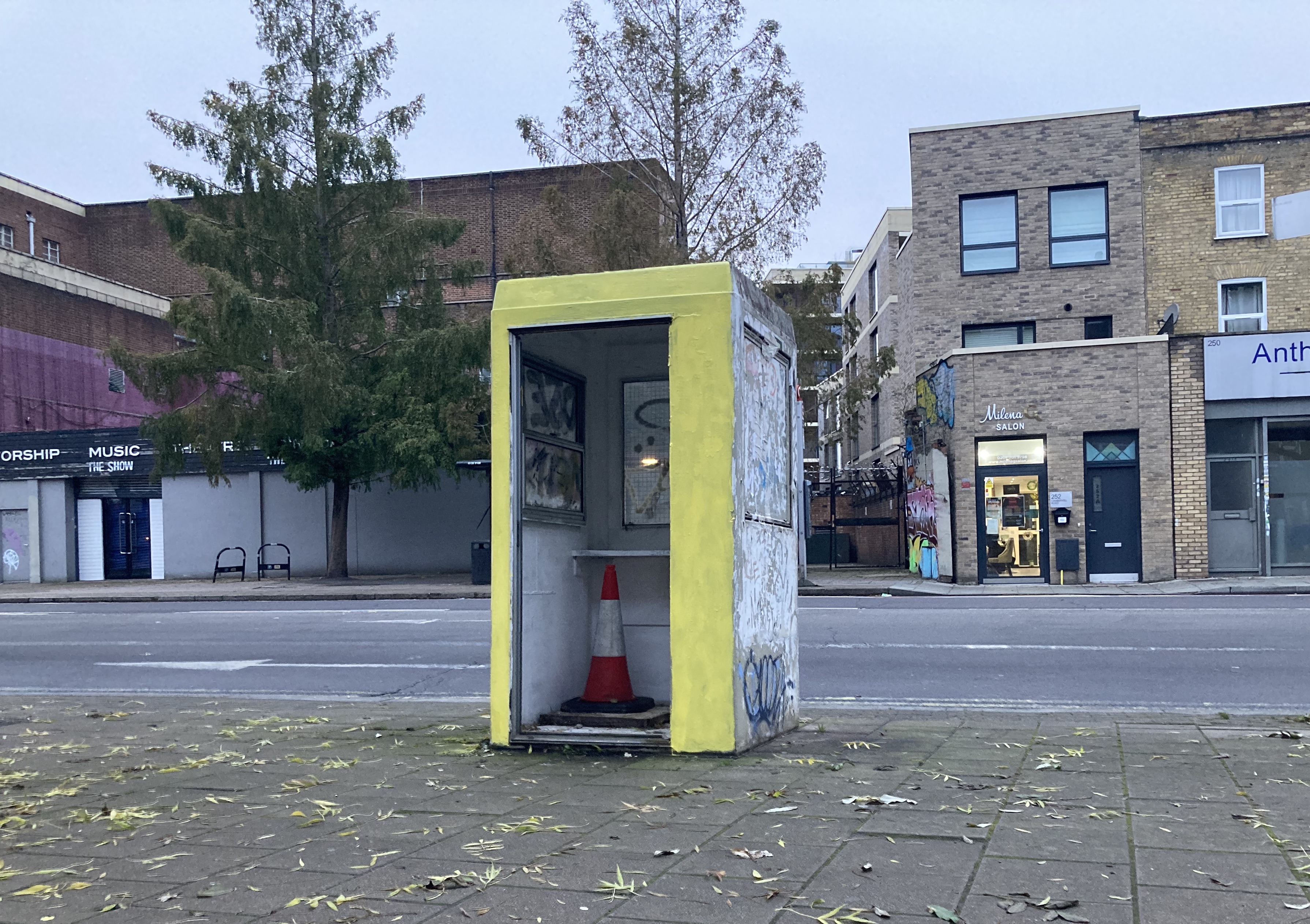
 Kabinett Gallery