
The Manger
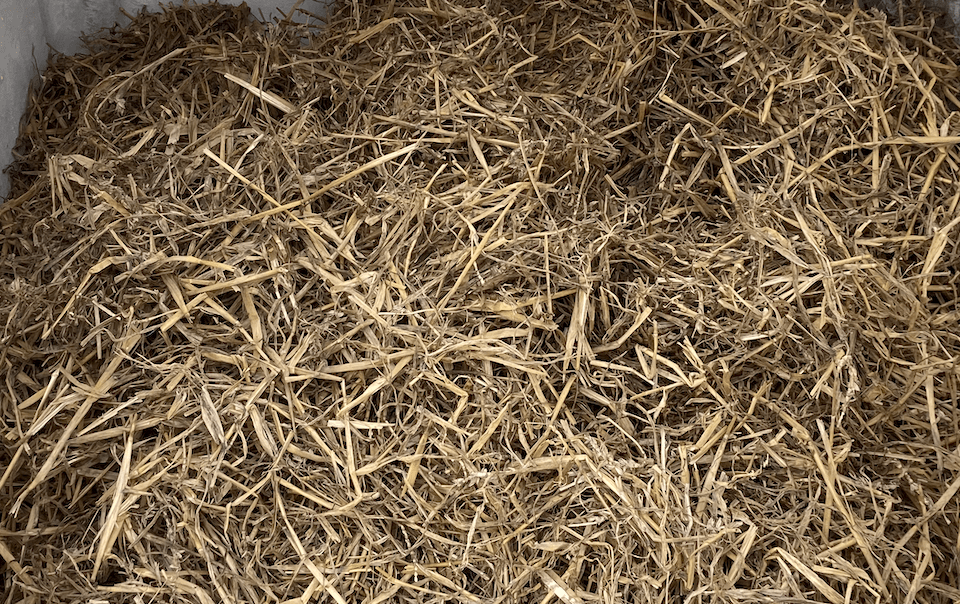
Straw detail
About
In compelling contrast to the surrounding landscape, a bale of straw transforms the Kabinett into an urban manger. The stark incongruence between the innately synthetic urban density of the area and the organic materiality of straw presents an unexpected juxtaposition between stigmatised habitats and the likelihood of encounters.
Like Agnes Denes’ 1982 prophetic installation, Wheatfield, the cerebral interaction between the built and natural environment inspires questions about “misplaced priorities and deteriorating human values” in a time when environmental sustainability is an ever-growing topic of debate.
Straw has many uses, one of which is providing warmth and shelter to people and animals. In rural areas across the world, there exists a long tradition of travellers and vagrants sleeping on straw.
In Switzerland the practice has become common enough that barn hotels have popped up across the country providing hikers an inexpensive and relatively comfortable place to sleep. As the Kabinett is not only a creative platform but also a shelter, the straw acts as a nest of sorts.
During the winter, the Kabinett floor had suffered from a high level of moisture and poor drainage. Straw is highly absorbent, inexpensive, and readily available, which provided a temporary solution to increased water retention and residual liquid left from passersby sometimes urinating in the Kabinett.
10 feb 2024 – current
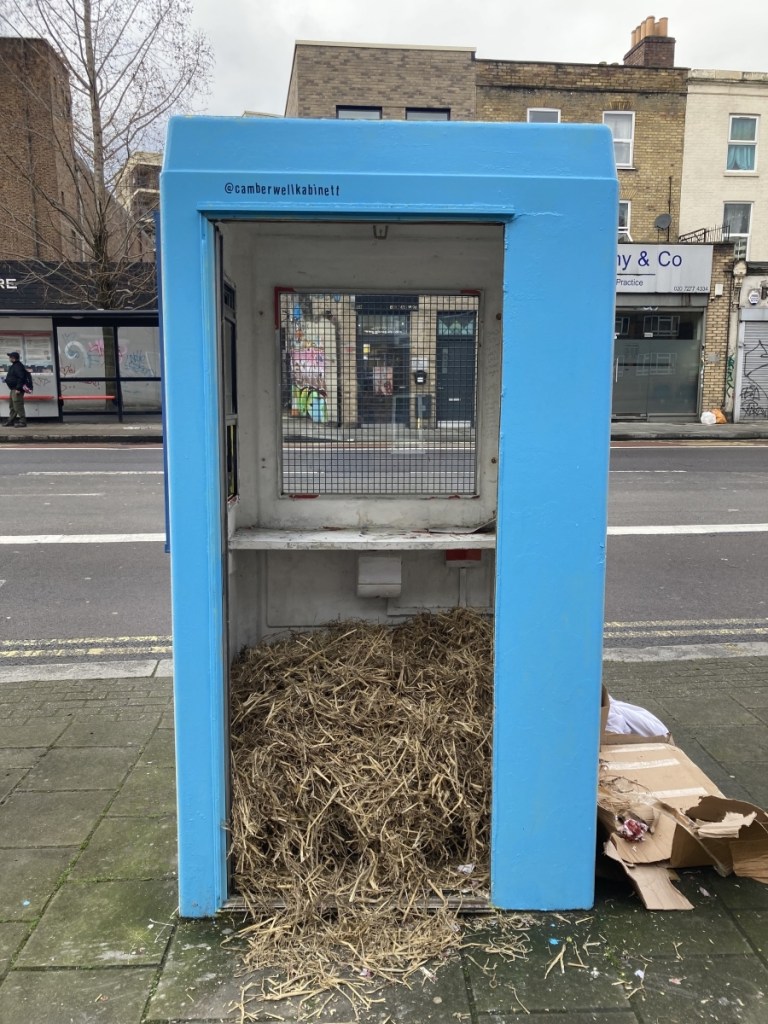

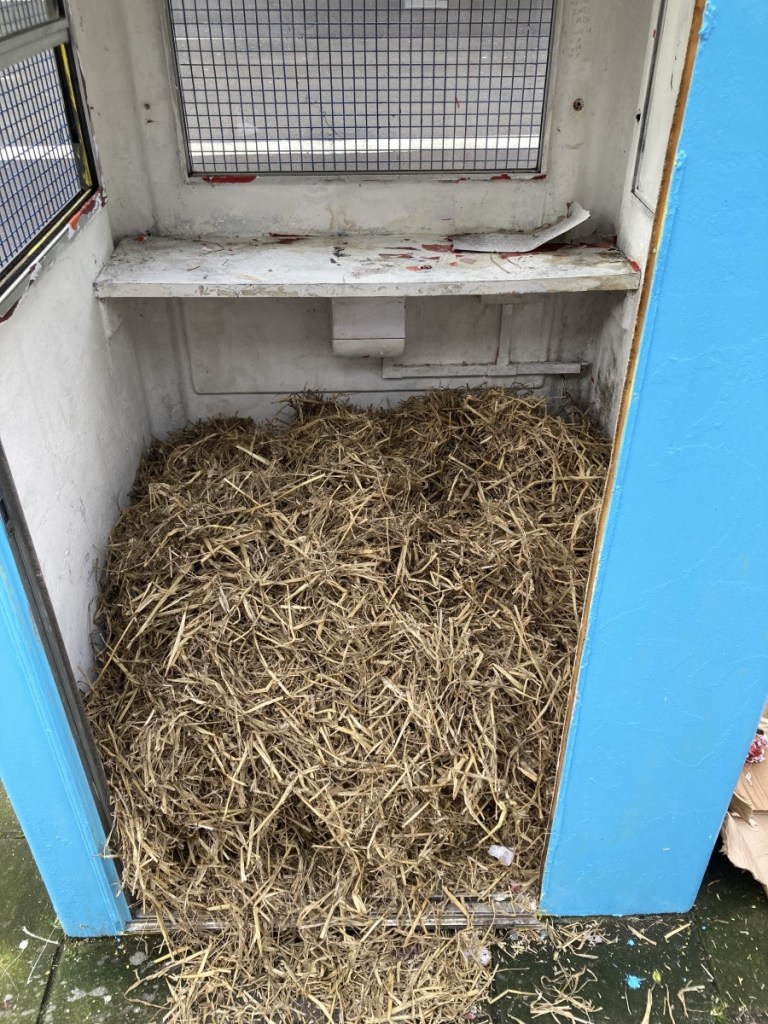
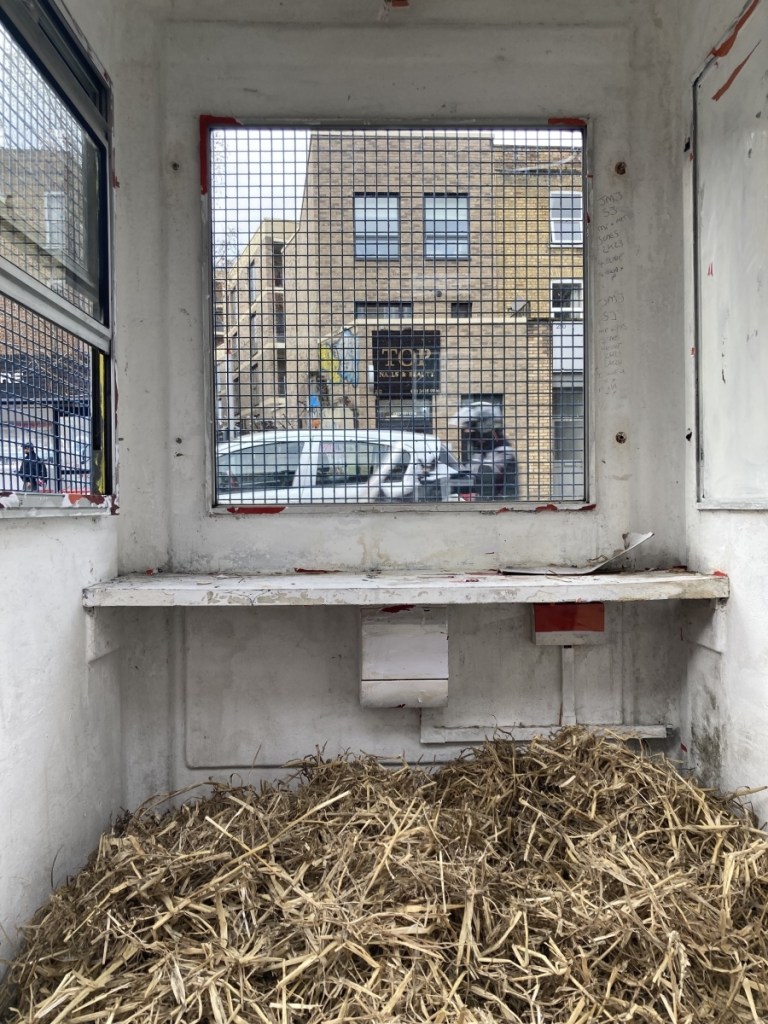
Hay bale
Approximately 12 kilos of straw
 Kabinett Gallery